
Notifications
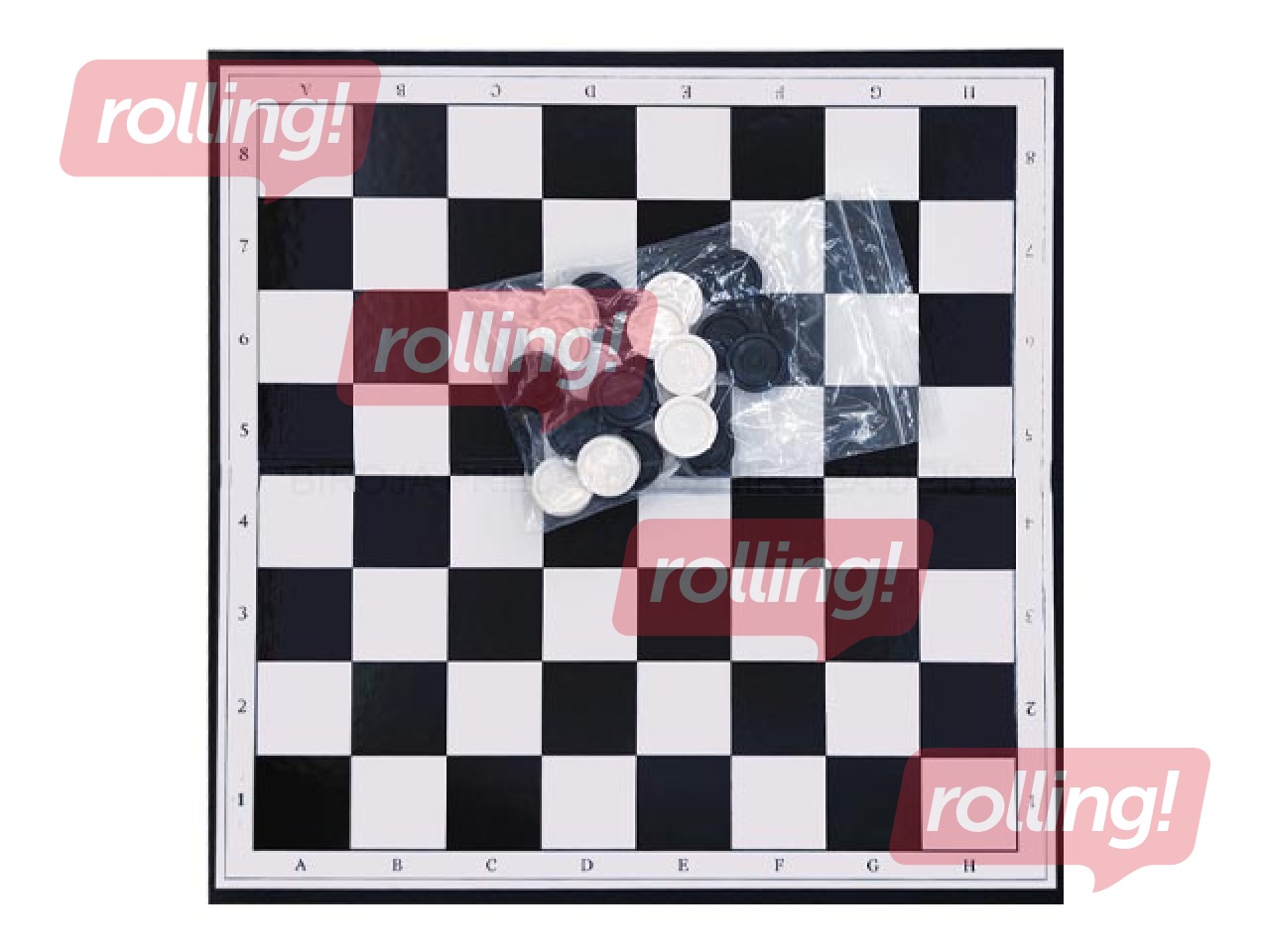
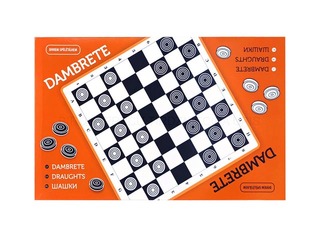
CloseBoard Game Checkers
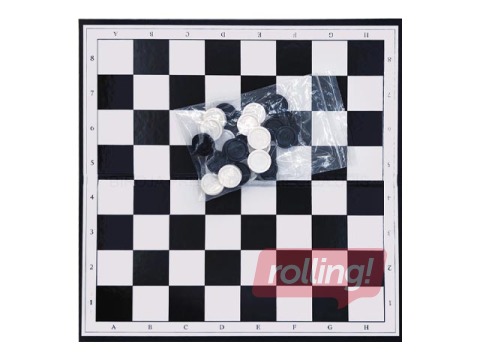
A king is denoted by a double piece, with one piece placed on top of the other, both of the same color. A king can move diagonally across an unlimited number of squares in any direction. A king cannot jump over its own pieces. If a king encounters an opponent's piece and there is at least one empty square behind it, a jump must be made, placing the king on any free square in the direction of the jump, behind the opponent's piece. If, after capturing one piece, a jump can be continued from the next free square, it must be done. The player who captures or blocks all the opponent’s pieces wins. If neither player can win, the game ends in a draw.

Rolling Crowns
CloseA new and unique extra for users of Rolling Online – the loyalty program Rolling crowns!
When shopping in the Rolling office supermarket www.rolling.ee, our customers can collect Rolling crowns, which are equated to EUR.
The savings can be used in 2 great ways:
- the saved Rolling crowns can serve as payment for the ordered goods and services, hence receiving an extra discount and increasing savings of your company;
- within their savings the Rolling users can select a gift to their liking from the bonus goods catalogue – starting from various practical things, to trips, language courses a.o. pleasant prizes.
The loyalty participant can check the amount of saved Rolling Crowns by logging into the Rolling Online system under My Profile. The saved Rolling Crowns are valid for 1 (one) year from the day they are granted. Rolling Crowns, which are saved first, are used first at the time of settlement.
To start using the loyalty program, please contact our sales managers!
You are welcome to register and start enjoying all advantages of Rolling customers right now!

Shopping Cart
Close